
Over the past ten years, one of my chief goals has been to help my son develop strong social skills and a social network. I recognize that socializing isn’t his preferred activity, but as a savvy social butterfly, I made it my mission to help him become as social as possible.
In the end, what matters most in life is the ability to make connections and adapt to challenging environments. These are the keys to professional and personal success.
Here are some strategies to help develop your neurodiverse child’s or teen’s abilities to perform well in social communities.
1. Get involved in special needs sports programs
My first tip comes from years of experience with special needs sports teams. We are extremely fortunate to live in a time when our kids have access to various special needs sports.
Though I was quite apprehensive every time we tried something new, I never regretted a single activity. As each professional opportunity in your life brings about new chances for growth, so does each sport or group your child attempts to join.
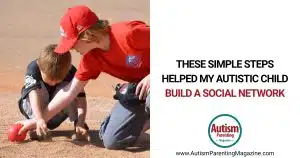
One of our first experiences was with a special needs baseball team. This four-year journey was our introduction to inclusive sports, and it became a turning point for our family.
Having a consistent teammate over the years was a tremendous gift. It gave my child the chance to build trust and form a meaningful relationship outside of our immediate family.
In the meantime, he learned to hit and run after the ball, run those bases, stand during the national anthem, sit on a bench, and cheer for and encourage others.
At that time, our home felt more like an occupational therapist’s office. However, we enjoyed some fresh air with some incredible people every Saturday. I cherish these memories and the friendships formed.
Find a special needs sport in your area and sign up your child. Do not hesitate to join any organization that offers your child support. If your child needs more help, request it.
If your child needs less help, you can request more independence and focus on leadership. A few of our favorite sports we tried were:
- special needs soccer,
- baseball,
- basketball,
- surfing,
- tennis, and
- adaptive dance.

2. Host social opportunities at home
Entertaining at home is one of the easiest ways to encourage social skills growth in a familiar environment. Children with special needs often perform better in the comfort of their own homes.
Familiarity allows neurodiverse learners to feel comfortable. Entertain as often as possible and with a wide variety of guests.
I did this from the beginning of my children’s lives because I knew the importance of social interaction and what it meant to their neurological development.
Invite people over who will engage with your child with needs. Be sure to share your child’s interests and to find common interests amongst the kids.
I have found that video, board games, and outdoor activities are all appropriate and enjoyable to engage in when having a playdate.
During COVID-19, we hired instructors who led makeshift classes in our backyard. I wanted to be sure we wouldn’t lose the social skills we had worked hard to earn.
My home was a playground for many neurodiverse and neurotypical kids in the neighborhood. This encouraged my kids to engage and grow with others once a week.
Though entertaining is always a great deal of work, make it easy on yourself by ordering pizza, making sandwiches, or just asking everyone to bring something to contribute.
Remember that you are investing in your child’s future by putting them in as many social situations as possible. Despite the work it takes to clean up, prepare food, and make yourself presentable, it is good for kids and parents alike.
3. Set and advocate for social skills goals in the IEP
Always include a social skills goal in your child’s IEP. Social skills goals are necessary for most neurodiverse students. Make sure you highlight what skills your child does have and build upon them.
Share what is working in your home, and request that educators use similar strategies to get your child to engage in the classroom.
Make sure you push for social growth every year. You can do this by signing your child up for clubs and after-school programs. We have tried physical fitness and gaming clubs, folklore dancing, and band.
These are opportunities for your child to practice the skills you’ve taught in the comfort of your home or therapy.
Ensure your school stays on top of these goals, and check in at least every two to three months to find out how your child is doing socially.

Ask questions such as the following:
- “How is X doing at recess and lunch?”
- “Who does he play with or eat lunch with?”
- “Can we do more to support him outside the classroom?”
- “Is a paraprofessional available while my child is out of the classroom?”
Send videos of successful interactions if they need evidence of your wins. Sometimes, teachers and therapists need to see what is working
Where we are today
Today, my son plays tennis and is on a golf team. The special needs support in sports is no longer needed. One day, I will share stories with him about how valuable and important those special needs sports and play dates were to us as a family.
They helped him become who he is today. They supported him in finding a door out of his head and into the world.
FAQs
Q: How do you improve social interaction in autism?
A: You can improve social interaction in autism through structured social skills training, role-playing, and using visual supports. Consistent practice in real-life settings and positive reinforcement also help build confidence and connection.
Q: Can an autistic child be very sociable?
A: Yes, some autistic children are very sociable and enjoy interacting with others, though they may communicate or connect in ways that differ from neurotypical peers. Their sociability can be expressed through shared interests, routines, or unique ways of showing affection.
Q: What is the best lifestyle for autism?
A: The best lifestyle for autism includes consistent routines, sensory-friendly environments, and support systems that respect individual needs. Encouraging special interests, maintaining clear communication, and providing emotional support are also essential.
References
Lei, J., Qian, X., & Kim, K. M. (2025). Social Network Structure in Autistic Individuals: A Systematic Review. Autism in Adulthood. https://www.liebertpub.com/doi/abs/10.1089/aut.2024.0029
Locke, J., Shih, W., Kang-Yi, C. D., Caramanico, J., Shingledecker, T., Gibson, J., … & Mandell, D. S. (2019). The impact of implementation support on the use of a social engagement intervention for children with autism in public schools. Autism, 23(4), 834-845. https://journals.sagepub.com/doi/abs/10.1177/1362361318787802
Akhmetzyanova, A., Artemyeva, T., & Minullina, A. (2024). Specifics of socialization of children with autism spectrum disorders. European Psychiatry, 67(S1), S659-S659. https://www.cambridge.org/core/journals/european-psychiatry/article/specifics-of-socialization-of-children-with-autism-spectrum-disorders/32CEBEFD617069B9E446D940A53DC95C
Salah, B. M., Sakher, S., Darawsheh, S. R., Quraann, E. A., Zaghlool, Z. D. M., Alkhawaldeh, M. A., … & Al Sabi, Y. N. (2023). Guidance for autistic children in increasing confidence in socializing. Inf Sci Lett, 12, 807-12. https://www.naturalspublishing.com/download.asp?ArtcID=25600