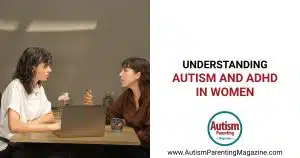

Awareness of autism and ADHD in women has increased in recent years, as more people recognize that these conditions often present differently in females. For a long time, autism and ADHD were diagnosed based on how they appear in boys, which led many women to be overlooked.
Women are more likely to internalize symptoms and develop masking behaviors that hide their struggles, making it harder to meet traditional diagnostic criteria. Many go through life without knowing they are neurodivergent, using coping strategies to manage challenges, which often leads to burnout and mental health issues.
Why autism and ADHD often go undiagnosed in women
Underdiagnosis of autism and ADHD in women stems from historical gender biases in research and diagnostic criteria. Initial studies mostly focused on males, leading to diagnostic tools that emphasize traits more commonly observed in boys.
For autism, this often meant overlooking the quieter, more internalized presentations in girls. For example, they may have intense but socially acceptable special interests or subtle difficulties in social reciprocity.
Similarly, ADHD criteria historically highlighted hyperactive and impulsive behaviors more typical in males. The inattentive subtype, more prevalent in girls, was less recognized.
This male-centric view has created a significant gender gap in diagnoses, leaving many women to navigate life without understanding their neurodivergence.
Furthermore, social masking and coping strategies employed by girls and women often obscure their autistic and ADHD traits.
From a young age, societal expectations encourage girls to be socially adept, leading many neurodivergent girls to develop sophisticated camouflaging techniques.
This can involve mimicking neurotypical behaviors, rehearsing social interactions, and suppressing stimming.
While these strategies aid in social integration, they can mask the underlying difficulties from clinicians and loved ones, contributing to delayed or missed diagnoses.
The internal stress and cognitive load of maintaining these masks can manifest as:
- anxiety
- bipolar disorder
- depression
- mental disorders
- emotional dysregulation
All of these may lead to misdiagnosis with conditions like anxiety disorders, depression, low self-esteem, or even borderline personality disorder. This further delays the identification of the underlying neurodevelopmental conditions.
What do autism and ADHD look like in women?
In women, autism often presents with a more internalized profile compared to men.
While diagnostic criteria often highlight externalizing behaviors, autistic women may exhibit intense, specific interests that align with societal norms, such as a deep focus on literature, animals, or social justice issues.
Social difficulties might manifest as:
- a feeling of being an outsider,
- struggling with nuanced communication,
- experiencing anxiety in social situations, even if they possess strong surface-level social skills learned through observation.
Sensory sensitivities, a core feature of autism, can also be internalized, leading to significant inner distress from seemingly mild stimuli that others barely notice.
ADHD in women also frequently takes on a more internalized presentation, often characterized by inattentive symptoms rather than the more outwardly visible hyperactivity.

This can include difficulties with organization, time management, and maintaining focus, leading to a sense of underachievement or feeling overwhelmed by daily tasks.
While hyperactivity might be less obvious, it can manifest internally as restlessness or racing thoughts. Both autism and ADHD in women can share traits like sensory sensitivities, emotional dysregulation, and executive function challenges.
However, a key distinction in autism often lies in the presence of restricted, repetitive behaviors or intense interests, alongside qualitative differences in social communication and interaction that go beyond inattention or impulsivity.
The tendency for women to mask their neurodivergent traits further contributes to this internalized presentation, often delaying or obscuring accurate diagnosis.
Autism and ADHD in women: Symptoms & overlaps
While autism and ADHD share some similarities, each condition also has its own unique traits. Let’s take a closer look at how autism and ADHD in women can present.
Autism in women
Autism in women can manifest through a range of often internalized symptoms.
Socially, women may exhibit a strong desire for connection. However, they may struggle with social interaction, leading to anxiety in social settings or a preference for a few close friendships over large groups.
They might develop sophisticated masking techniques to fit in, such as mimicking social cues or preparing scripts for conversations, which can be mentally exhausting.
Intense interests are common but may align with socially acceptable topics, and sensory sensitivities might be present but less outwardly expressed.
Communication differences can include difficulty with non-literal language or a tendency to take things very literally.
These more subtle presentations often contribute to delayed or missed diagnoses, as they may not align with traditional, male-centric understandings of autism.
ADHD in women
ADHD in women frequently presents with a less noticeable profile, often characterized by predominantly inattentive symptoms.
Instead of being overly active, women may struggle with staying organized, managing time, and focusing, often feeling overwhelmed or not good enough.
Even if they don’t seem restless on the outside, many women feel constantly unsettled or have racing thoughts. They may speak or make decisions quickly, but often try to hide it because they’re aware of how others might react.
This more internalized experience of ADHD often goes unrecognized, leading to delayed or inaccurate diagnoses. Often, mood disorders overshadow the underlying neurodevelopmental condition.
Overlapping traits
Executive function challenges are commonly seen in women with both autism and ADHD. They often impact organization, planning, and time management.
Difficulties with emotional regulation, leading to intense emotional responses and challenges in managing feelings, are also frequently reported.
Sensory sensitivities can be heightened, causing discomfort or overwhelm from sounds, textures, or lights. Social difficulties persist, even if masked, often resulting in social anxiety and a feeling of being misunderstood.

Women with both autism and ADHD may have intense interests or hyperfixations. These are often mistaken as only autistic traits but can also be part of the combined presentation.
These overlapping traits can create a complex internal experience, further complicating diagnosis and understanding.
Autism vs ADHD in females
Autism in females often centers around social communication differences and restricted, repetitive patterns.
In relationships, this might manifest as:
- difficulty understanding social cues,
- struggling with give-and-take in conversations,
- feeling overwhelmed in social settings, even when desiring connection.
At work, autistic women may excel in detail-oriented tasks or those involving focused concentration, but struggle with the unspoken rules of office politics or adapting to changes in routine.
Daily life can be characterized by a need for predictability, sensitivities to sensory input (like loud noises or bright lights), and a reliance on routines to manage anxiety.
On the other hand, ADHD in females primarily involves challenges with attention, hyperactivity, and impulsivity.
Relationships may be affected by inattentiveness, such as forgetting important details or interrupting conversations, and by emotional impulsivity, leading to intense reactions.
In the workplace, ADHD can present as difficulty meeting deadlines, frequent job changes due to boredom or disorganization, and struggles with prioritizing tasks.
Daily life for women with ADHD can feel chaotic, with challenges in managing household chores, maintaining organization, and a constant sense of being overwhelmed by everyday demands.
Late diagnosis and adult life
Finding out as an adult woman that you have an autism diagnosis and ADHD can bring a lot of different feelings. At first, it might feel like a lightbulb goes on, and suddenly, many things from your life make sense.
You might finally understand why you’ve always felt a bit different, struggled with focus, been sensitive to noise, or had intense interests that others didn’t share.
This can be a huge relief, like you can finally say, “Okay, that explains things.” However, it can also bring up sadness about the years spent not knowing, feeling confused, or thinking something was wrong with you.
Once you have these diagnoses, you often start to understand yourself better. You can see your strengths and the things you find tricky. This can help you be kinder to yourself and find ways to cope that work for you.
Connecting with other women and autistic adults who also have autism and ADHD can be really helpful. Sharing stories and tips with people who get it can make you feel less alone and more understood.
Getting good, easy-to-understand information about autism and ADHD in women is also important, so you can learn more about yourself and ask for what you need.
Getting support as a woman with ADHD and autism
Getting the right kind of support as a woman with ADHD and autism spectrum disorder starts with getting a clear diagnosis.
This can sometimes mean advocating for yourself with doctors, because often the understanding of these conditions was based more on how they showed up in men.
Try to find doctors who know a lot about neurodevelopmental conditions and how they look in adult women.
Be ready to talk about your whole life, even things from when you were a kid, and don’t be afraid to get another opinion if you feel like you weren’t really heard.
Once you have a diagnosis, professionals can help with therapy that understands how your brain works. This could involve learning how to manage things like focus, sensory issues, social interactions, and big emotions.
Sometimes, medication can also be helpful for ADHD symptoms. Besides professional help, building a good support system and taking care of yourself are important.
Think about things that could make your work or school life easier, like a flexible schedule, quiet headphones, or breaking big tasks into smaller steps.
Look for support groups where adults with autism and ADHD, especially young women, get together. These groups can be amazing for sharing what you go through and getting tips from people who really understand.
Be kind to yourself and learn what your body and mind need. Make time for things you enjoy that help you feel calm, whether it’s being outside, diving into your interests, or doing things that feel good to your senses.
Remember, building a supportive life and taking care of yourself are key to doing well as a neurodivergent woman.
Embracing neurodivergence
It’s important to remember that every woman’s journey with autism spectrum disorder and ADHD is her own, filled with unique experiences, strengths, and challenges. What resonates with one person may not entirely reflect another’s reality, and that’s perfectly okay.
This exploration is just the beginning, and there’s a wealth of information and understanding waiting to be discovered. We encourage you to continue learning, to seek out resources that speak to your individual experiences, and most importantly, to reach out and connect with others who can offer support and validation.
Embracing your neurodiversity and building a happy life that honors your authentic self is a powerful and positive path forward.
FAQs
Q: What do autism and ADHD look like together in women?
A: In women, autism and ADHD can show up as struggles with social interaction, communication, focus, and impulsivity. It often looks different from how it appears in men. Women may hide their autistic traits, and they’re more likely to have trouble paying attention than to be overly active.
Q: Can ADHD mask autism?
A: Sometimes, ADHD symptoms like hyperactivity and impulsivity stand out more and can hide the quieter signs of autism, such as social difficulties or focused interests. On top of that, many women mask their autistic traits, making it even harder to get an accurate diagnosis when both conditions are present.
Q: What does high-functioning autism in a woman look like?
A: High-functioning autism in women often involves average or high intelligence, social communication difficulties, and strong interests that may be masked to fit in. This masking can include copying others, planning conversations, and suppressing stimming. They may appear shy, have intense but short-lived friendships, and enjoy socially accepted hobbies. Internally, they often struggle with anxiety, depression, and exhaustion from masking.
Q: How do I know if I’m masking my ADHD?
A: You might be hiding your ADHD if you’re always trying to seem more focused, organized, or calm than you feel. This can mean using exhausting systems to stay on track, rehearsing social behavior, avoiding fidgeting, or overcompensating for time issues. They may often leave you drained and feeling like a different person in private.
References
Rynkiewicz, A., Janas-Kozik, M., & Słopień, A. (2019). Girls and women with autism. Psychiatr Pol, 53(4), 737-752. https://www.academia.edu/download/73434769/ENGverRynkiewicz_PsychiatrPolOnlineFirstNr116.pdf
Craddock, E. (2024). Being a woman is 100% significant to my experiences of attention deficit hyperactivity disorder and Autism: exploring the gendered implications of an adulthood combined autism and attention deficit hyperactivity disorder diagnosis. Qualitative Health Research, 34(14), 1442-1455. https://journals.sagepub.com/doi/abs/10.1177/10497323241253412
Zener, D. (2019). Journey to diagnosis for women with autism. Advances in autism, 5(1), 2-13. https://www.emerald.com/insight/content/doi/10.1108/aia-10-2018-0041/full/html
Xi, T., & Wu, J. (2021). A review on the mechanism between different factors and the occurrence of autism and ADHD. Psychology research and behavior management, 393-403. https://www.tandfonline.com/doi/abs/10.2147/PRBM.S304450
Posserud, M. B., Skretting Solberg, B., Engeland, A., Haavik, J., & Klungsøyr, K. (2021). Male to female ratios in autism spectrum disorders by age, intellectual disability and attention‐deficit/hyperactivity disorder. Acta Psychiatrica Scandinavica, 144(6), 635-646. https://onlinelibrary.wiley.com/doi/abs/10.1111/acps.13368
Van Der Putten, W. J., Mol, A. J. J., Groenman, A. P., Radhoe, T. A., Torenvliet, C., van Rentergem, J. A., & Geurts, H. M. (2024). Is camouflaging unique for autism? A comparison of camouflaging between adults with autism and ADHD. Autism Research, 17(4), 812-823. https://onlinelibrary.wiley.com/doi/abs/10.1002/aur.3099